

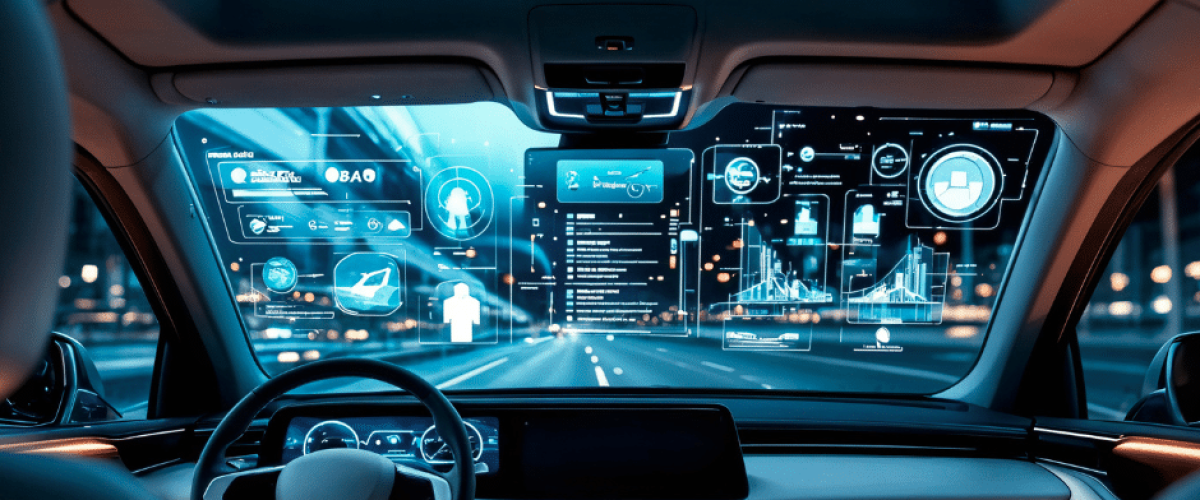
California is giving police new powers to cite driverless cars and autonomous vehicle companies. Here’s what Ontario- and cities like Ottawa should consider before driverless cars become common on our roads.
California is moving to close a strange gap in traffic enforcement: what happens when a driverless car breaks the rules, but there is no human driver to ticket?
That question is no longer theoretical. California’s Department of Motor Vehicles has adopted new autonomous vehicle regulations allowing law enforcement to issue a “Notice of AV Noncompliance” to manufacturers when an autonomous vehicle commits a moving violation. The rules also require autonomous vehicle companies to respond to first-responder calls within 30 seconds and to clear vehicles from active emergency zones when directed.
Ontario should be paying attention and municipalities like Ottawa should be paying even closer attention.
Driverless Cars Are Not Just a California issue
When people think of robotaxis, they may picture San Francisco, Los Angeles, Phoenix, or Silicon Valley. But autonomous vehicle technology is already part of Ontario’s transportation future.
Ontario introduced an Automated Vehicle Pilot Program in 2016 and expanded it in 2019 to allow driverless automated vehicle testing under specific conditions. In 2025, Ontario also launched a 10-year Automated Commercial Motor Vehicle Pilot Program for certain commercial vehicles weighing more than 4,500 kg and equipped with Level 3, 4, or 5 automation.
Ottawa is especially relevant because of Kanata North and Area X.O. In October 2025, Kanata North announced Canada’s first all-season, medium-speed autonomous shuttle pilot. This involves a winter-ready Level 4 electric shuttle operating on a 4.5 km route with eight stops in Canada’s largest technology park. The project expressly aims to generate lessons about:
- four-season autonomous vehicle performance
- municipal safety frameworks
- inclusive design
- future policy recommendations
Area X.O is operated by Invest Ottawa. It is designed for connected and autonomous vehicle testing in a four-season environment, advanced communications infrastructure and Band 14 spectrum reserved for first responders.
This is not a distant problem because Ottawa is one of the places where Canada’s autonomous vehicle future may be tested first.
The California Lesson: A Traffic Ticket Is Really An Accountability Tool
The most important part of California’s approach is not the ticket itself. It is the principle behind it.
A human driver who, runs a red light, blocks an emergency vehicle, fails to stop for a school bus, or something else can be:
- identified
- charged
- fined
- insured
- suspended
- sued
But when the “driver” is a system built by a manufacturer, trained on software, supervised remotely, and deployed by a company, the ordinary traffic enforcement model starts to break down.
That creates a public safety problem and a legal problem.
California’s new model helps fix this gap because it gives police and regulators a practical way to record rule-breaking. It also gives regulators tools beyond a one-time fine, including operational restrictions when necessary for public safety.
Ontario should consider a similar framework before autonomous vehicles become common on
- Ottawa streets,
- Highway 417,
- rural Eastern Ontario roads,
- and the mixed pedestrian-cyclist-transit corridors around
- downtown
- Centretown
- Sandy Hill
- Westboro
- Orleans
- Barrhaven
- Kanata


What Ontario Could Do About Driverless Car Enforcement
Ontario already has a framework for testing automated vehicles therefore the next step is to make enforcement, data access, and injury accountability more concrete. Below are four concepts Ontario could consider:
1. Create a formal “autonomous vehicle non-compliance” process
If an AV commits a moving violation, police should not be left trying to decide whether the ticket belongs to a:
- remote operator,
- a passenger,
- a software developer,
- a fleet owner,
- or no one at all.
There should be a direct reporting and enforcement pathway to the approved pilot participant or vehicle operator.

2. Require faster incident reporting
Requiring a faster incident reporting when an autonomous vehicle is involved in a:
- collision
- blocks traffic
- enters a restricted area
- behaves unpredictably near pedestrians, cyclists, emergency vehicles, school buses, construction zones, or railway crossings.
could be helpful
Ontario’s automated commercial vehicle pilot already includes data obligations and notice requirements for certain incidents. Some of these requirements include collecting and retaining trip and vehicle data. The same mindset should apply more broadly as the technology develops.

3. Regulations for preserving evidence
require preservation of key vehicle data after any collision causing injury. In a conventional crash, evidence may include:
- skid marks
- dashcam footage
- vehicle damage
- police measurements
- witness statements
- medical records.
In an autonomous vehicle case, the most important evidence may be digital:
- sensor logs
- lidar data
- camera feeds
- disengagement records
- remote-assistance communications
- software version history
- GPS records, hard-braking events
- object detection records
- warnings issued to a remote assistant or safety driver.

4. Clarify Liability
define how liability works when automated technology contributes to a crash. Existing:
- negligence,
- insurance,
- product liability, and
- occupier-style principles
may still apply, but injured people should not be forced into a long and expensive blame-shifting exercise between:
- insurers
- manufacturers
- software companies
- fleet operators
- remote supervisors
- public authorities

The law should make one thing clear: if a company puts a vehicle on Ontario roads, and that vehicle injures someone because of:
- unsafe design,
- unsafe deployment,
- poor monitoring,
- defective software,
- inadequate testing, or
- failure to respond to road conditions
accountability should not disappear just because there was no human behind the wheel.
What the City of Ottawa Could Do at the Municipal Level
Ottawa has a special role because it is a municipality with road safety obligations and a technology hub where autonomous mobility projects are being tested.
The City of Ottawa could require any autonomous vehicle pilot using municipal roads to provide:
- route maps,
- operating hours,
- winter-weather limits,
- emergency contact protocols,
- public reporting procedures, and
- a plain-language safety plan
before vehicles operate around the public. The City already has a Road Safety Action Plan focused on:
- vulnerable road users
- intersections
- rural areas
- high-risk driver behaviour.
Autonomous vehicle oversight should fit into that existing road safety lens, not sit outside it.


Ottawa could also require advance consultation with:
- Ottawa Fire Services
- Ottawa Paramedic Service
- Ottawa Police Service
- OC Transpo
- school boards
- cycling
- pedestrian safety groups
- accessibility advisory bodies
- affected councillors.
A driverless vehicle that behaves acceptably on a closed test track may still create risk when it encounters an
- ambulance
- a snowbank
- a cyclist taking the lane
- a Para Transpo stop
- a construction detour
- a pedestrian using a mobility device on a crosswalk
Ottawa should also treat winter as a central safety issue, not a footnote. Autonomous vehicles in Eastern Ontario must deal with:
- snowbanks that narrow lanes
- lane markings hidden by snow
- freezing rain
- potholes
- salt spray
- fogged sensors
- temporary road closures
- pedestrians crossing around snow piles.
If the technology cannot perform safely in those conditions, the operating approval should say so.
Finally, Ottawa could publish a local autonomous vehicle incident registry. Residents should not have to rely on viral videos or social media posts to learn whether a driverless vehicle blocked an:
- intersection
- stopped unexpectedly
- entered a restricted zone
- was involved in a collision.
Public confidence depends on transparency.
Injured by a Driverless Car in Ontario? Why Data Matters
Most “what to do after an accident” articles sound the same because the basic advice is usually the same: get medical care, report the collision, document the scene, keep records, and speak with a lawyer. That advice is still correct. But an autonomous vehicle collision adds a different urgency.
The first question is not simply “Who hit me?” It may be “What did the vehicle know, when did it know it, and who had control?”
After a crash involving a driverless or semi-autonomous vehicle, the injured person may not be able to identify the true defendant at the roadside. The vehicle may be owned by one company, operated by another, insured by another, equipped with software from another, and monitored by a remote assistant somewhere else. The human passenger may have had no control at all.
That is why early legal investigation matters. A lawyer may need to send preservation letters quickly so that
- vehicle logs,
- sensor data,
- dashcam footage,
- onboard video,
- remote-operator communications,
- maintenance records,
- software update history, and
- incident reports
are not overwritten or lost. In some cases, the most important evidence may never be visible from the street.
Medical care still comes first. Your health and your legal claim both depend on an accurate record of the injuries caused by the collision. Once safety and treatment are addressed, the next priority is preserving the digital trail. A photograph of the vehicle may help, but the vehicle’s own data may explain why it failed to:
- stop,
- failed to yield,
- braked suddenly,
- misread a lane,
- or entered a space it should have avoided.
This is also why injured people should be cautious about early statements to insurers or company representatives. In a normal car accident, the liability dispute may be between two drivers. In an autonomous vehicle case, the dispute may involve sophisticated corporate parties with access to technical evidence long before the injured person ever sees it.

Why This Matters for Pedestrians, Cyclists and Rural Road Users
Autonomous vehicle regulation should not be written only for passengers inside the vehicle. It must protect the people outside it.
Ottawa has dense urban areas, suburban arterials, rural roads, university zones, construction corridors, winter cycling routes, school zones, and busy transit hubs. A safe autonomous vehicle system must be able to recognize and respond to real people in real conditions:
- a cyclist avoiding a pothole on Bank Street,
- a pedestrian crossing at dusk in Vanier,
- a motorcyclist on a rural road outside Carp,
- or a child stepping from behind a snowbank near a school.
Transport Canada reported that Canada recorded 1,964 motor vehicle fatalities and 9,261 serious injuries in 2023,. Fatalities reached the highest count in the previous 10 years. New technology should reduce that harm, not create a new category of crashes where responsibility is harder to prove.
Bergeron Clifford’s View on Autonomous Vehicle Liability
Autonomous vehicles may eventually make roads safer. But safety claims should be tested against evidence, not marketing.
When an injured person or family is left dealing with serious harm, the legal system must be able to answer basic questions:
- Who controlled the vehicle?
- Who approved it for the road?
- What data did it record?
- Did the system perform as promised?
- Was the vehicle operating within its approved conditions?
- Did the company respond properly after the incident?
- Could the crash have been prevented?
Bergeron Clifford Injury Lawyers represents injured people across Ottawa and Eastern Ontario. Our firm focuses exclusively on injury law, and we prepare cases with the care, evidence, and expert support needed to deal with complex liability issues. We have an Ottawa consultation office at 185 Somerset Street West, Suite 305, and we serve clients throughout Eastern Ontario.
If you or someone in your family has been seriously injured in a motor vehicle collision, including a collision involving advanced driver assistance technology, a commercial vehicle, a rideshare vehicle, or a potential autonomous vehicle, contact Bergeron Clifford Injury Lawyers for a free consultation.
Technology changes. The need for accountability does not.
FAQ Section
Can a driverless car be ticketed in Ontario?
Ontario does not yet have the same autonomous vehicle ticketing framework California has adopted. Ontario has pilot programs for automated vehicles, but the province should consider a clearer process for police to report and enforce moving violations by driverless vehicles.
Who is liable if an autonomous vehicle causes a crash in Ontario?
Liability may involve the vehicle owner, operator, manufacturer, software developer, remote supervisor, maintenance provider, or another road user. These cases can require early preservation of technical data and expert analysis.
Are autonomous vehicles being tested in Ottawa?
Yes. Ottawa is home to Area X.O and Kanata North autonomous mobility projects, including an all-season, medium-speed autonomous shuttle pilot announced for Kanata North.
What evidence matters after a driverless car accident?
Important evidence may include sensor data, vehicle camera footage, software logs, GPS records, remote-operator communications, hard-braking data, maintenance records, and collision reports.
Do I need a lawyer after a crash involving autonomous vehicle technology?
A serious injury claim involving autonomous or semi-autonomous technology can become complex quickly. A personal injury lawyer can help identify responsible parties, preserve digital evidence, and coordinate the medical and expert evidence needed to prove the claim.


