

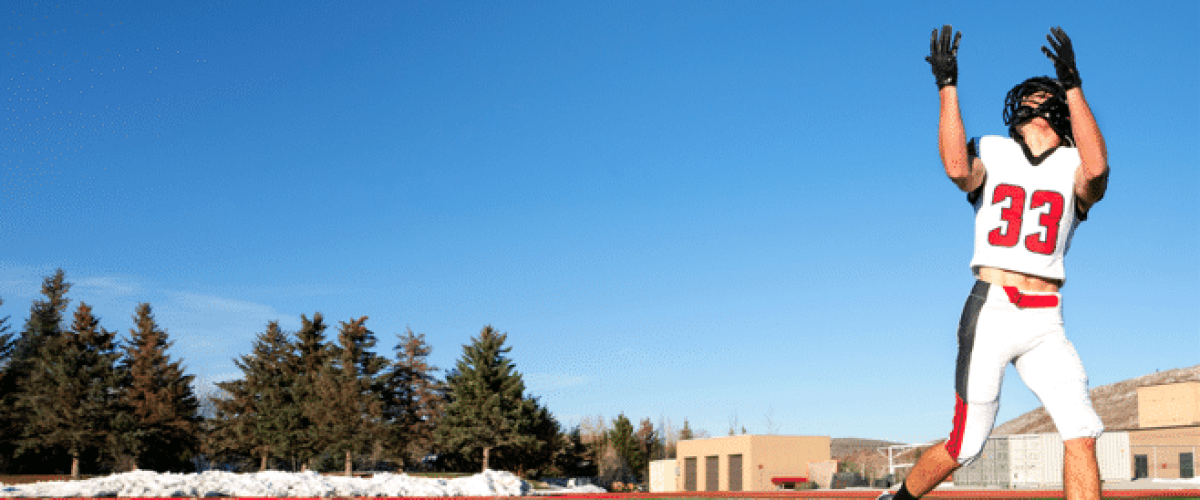
A student breaks an arm during gym class. A high school football player suffers a concussion after a hard tackle. A gymnastics exercise ends with a serious spinal injury.
Sports come with risk. But when an injury happens during a school sport in Ontario, calling it “part of the game” does not always answer the legal question.
As we discussed in our article on school injury compensation in Ontario, schools and school boards have responsibilities for student safety. In sports cases, liability often comes down to whether the people responsible for the activity took reasonable precautions.
Schools Are Not Automatically Liable Every Time a Student Gets Hurt
A school is not an insurer of every student’s safety. Accidents happen even when teachers and coaches act reasonably.
But schools owe students a duty of care.
One of the most important Canadian cases on this issue is the Supreme Court of Canada’s Myers v. Peel County Board of Education. A 15-year-old student suffered a catastrophic spinal cord injury after falling while practising gymnastics on the rings. The exercise was taking place without adequate supervision, and the protective matting was also inadequate.
Importantly, Myers describes the standard expected of teachers in terms of what would be expected of a careful or prudent parent in the circumstances. What reasonable care requires depends on factors such as the student’s age, experience and skill, the number of students being supervised, the nature of the activity and the equipment being used.
The more dangerous the activity, the more significant those precautions may become.
Ontario’s current Physical Activity Safety Standards in Education similarly address supervision, equipment, facilities and safety procedures for school physical activities.


What Does “Adequate Supervision” Actually Mean?
A teacher does not need to stand beside every student at every moment.
But supervision should make sense for the activity.
A teacher supervising experienced high school students playing badminton faces a different situation from a coach supervising younger students learning gymnastics, tackling techniques or another activity where a mistake could cause a serious injury.
That is part of what makes Myers so important. The Court did not impose an impossible standard on teachers. Instead, it looked at the actual circumstances and asked whether reasonable precautions had been taken.
Equipment Can Turn an Accident into a Negligence Question
Equipment was another important part of Myers. The Supreme Court upheld the finding that the protective matting underneath the gymnastics rings was inadequate.
Similar questions can arise with helmets, padding, nets, goalposts, gym equipment, playing surfaces and other protective equipment.
For example, was the equipment appropriate for the student’s size and ability? Was it properly maintained? Was damaged equipment removed? Were students instructed on its safe use?
Equipment does not need to make a sport risk-free. But reasonable precautions should reflect the seriousness of foreseeable injuries.
Concussions Have Changed the School Sports Safety Conversation
Concussions deserve particular attention because symptoms may not always be obvious immediately after a hit.
Ontario’s Rowan’s Law and the Ministry of Education’s school concussion policy requirements have created a much more structured approach to recognizing and responding to suspected concussions.
A student showing signs of a concussion should not simply be encouraged to “shake it off” and return to play.
The legal question can become particularly serious if a coach or teacher recognizes concussion symptoms but allows the student to return to activity and the student suffers another impact.
Our guide to concussions, post-concussion syndrome and second impact syndrome in Ontario explains why proper recognition and management of these injuries matter.


What If the Student Accepted the Risks of Playing?
Playing a sport means accepting some ordinary risks.
A hockey player knows collisions happen. A soccer player may be tackled. A basketball player can land awkwardly after jumping for a rebound.
But agreeing to play a sport does not necessarily mean accepting risks created by negligence.
We discuss that distinction further in our article on assumption of risk in Ontario sports injury cases.
Myers provides a useful example. The student was ultimately found 20% responsible, while the defendants were found 80% responsible. In other words, a student’s own conduct can matter without necessarily eliminating the responsibility of others.
When Could a School Sports Injury Amount to Negligence?
When injuries occur, there may be more than one potentially responsible party.
Depending on the facts, that could include the teacher or coach, the school or school board, another student or player, or potentially an outside organization involved in operating the activity.
For example, another player may bear responsibility for conduct that goes well beyond the ordinary rules and risks of the sport. A coach may have failed to supervise a dangerous drill. A school may have allowed defective equipment to remain in use. A school board’s policies or safety procedures may also become relevant to the investigation.
The question is always fact-specific: who had responsibility for the risk, what should reasonably have been done, and did a failure to take reasonable precautions contribute to the injury?
What Should Parents Do After a Serious School Sports Injury?
Medical care comes first, particularly where a head, neck or spinal injury may be involved.
Parents should also preserve information about what happened. That may include the school’s incident report, photographs, witness names, emails with teachers or coaches, medical records, information about the equipment involved and the applicable school safety or concussion policies.
Those details can be important because liability often turns on exactly what happened in the moments before and after the injury.
So, Are Ontario Schools Liable for Sports Injuries?
Sometimes.
The law does not expect teachers and coaches to prevent every sports injury. It expects them to take reasonable precautions having regard to the students, the activity and the risks involved.
Myers remains a useful illustration of that principle: a dangerous activity, inadequate supervision and inadequate protective equipment can turn what initially looks like a sports accident into a question of negligence.
The practical takeaway for parents is to look beyond the fact that an injury happened. Ask how it happened, who was responsible for supervising the activity, what precautions were in place and whether reasonable safety procedures were actually followed.
If you have questions about a personal injury claim involving a school sports injury in Ottawa, Kingston or elsewhere in Eastern Ontario, the team at Bergeron Clifford Injury Lawyers is pleased to help. You can schedule a free consultation.


